
This article is part of a series that is inspired by the recent event on Leadership & Health with Longevity Expert Ellen Nagel we hosted at Alive School. We talked about the four longevity pillars: nutrition, sleep, movement and mental health — and why they directly influence leadership capacity. Among these pillars, movement often receives the least strategic attention — although its impact is immediate.
Why movement belongs on every leadership agenda
Leadership today often takes place in highly cognitive environments: long conversations, many decisions, constant digital interaction, little natural movement. The body, however, does not adapt well to purely mental work without physical compensation.
In his bestselling book Outlive, Peter Attia describes exercise as perhaps the strongest available intervention for extending not only lifespan, but health span — the years in which we remain physically and mentally capable. He moves away from generic fitness recommendations and instead identifies four capacities that matter across a lifetime:
- Stability — to prevent injury and preserve balance
- Strength — to maintain muscle mass and physical independence
- Zone 2 training — to improve aerobic efficiency and metabolic resilience
- VO2 max — to strengthen peak cardiovascular performance
This framework feels highly relevant for leadership because it mirrors what sustainable leadership also requires: resilience, capacity, adaptability and recovery.
One reason exercise matters so much in leadership is that its effect begins almost immediately in the nervous system. Physical activity increases the release of neurotransmitters such as dopamine, serotonin and endorphins. These support mood regulation, concentration and emotional steadiness. At the same time, movement helps lower cortisol levels and activates the parasympathetic nervous system — the part of our physiology responsible for recovery and regulation.
This is why even moderate exercise often creates a noticeable internal shift: thoughts become clearer, emotional reactions soften, breathing changes, perspective widens. Especially after intense workdays, I often notice that what looked mentally complicated before movement becomes surprisingly manageable afterwards. Sometimes the body solves what the mind cannot.
My own way of integrating training
I have learned over the years that exercise only becomes sustainable when it reflects one’s personality. I am not someone who enjoys spending hours in a fitness studio or following highly technical training plans. For me, movement needs to feel purposeful, realistic and somehow connected to everyday life.
When my routine works well, I move around four times per week. This always includes one Pilates session, which gives me exactly what I need in terms of strength and stability. I appreciate that Pilates trains attention as much as muscles: posture, control, breathing, alignment. In addition, I do one back training session at home, mainly because I spend many hours sitting and know how quickly that becomes physically noticeable.
Swimming has become another important part of my week — usually around two kilometres, where I combine longer steady phases with shorter intervals. Without following strict metrics, this often means that Zone 2 and VO2 max naturally meet in one session. And then there is walking: ideally one longer walk of about an hour with my dog. What sounds simple is in fact one of the most reliable forms of regulation I know — physically and mentally. And first and foremost – it’s fun!
Leadership also means knowing when not to push
Of course, not every week looks ideal. There are demanding periods where energy is lower, where motivation is absent, where the schedule feels too full. Sometimes discipline is necessary. Sometimes I need to actively decide not to negotiate with myself. But over time I have also learned that leadership includes self-regulation — and that this should apply to training as well. There are weeks where doing less is wiser than insisting on the full programme. A shorter session, a walk instead of swimming, mobility instead of intensity. The important point is continuity without unnecessary rigidity. Because once movement becomes another source of pressure, it loses part of its positive effect.
A few principles that help in practice
What I keep returning to is this: Any movement changes the quality of the day. Not always dramatically, but often enough to matter. A short training session can shift a difficult mood. A walk can create clarity before an important conversation. Swimming can release accumulated tension that no reflection alone resolves.
For leaders in particular, movement is often less about performance than about maintaining internal quality.
What has proven realistic for me:
- Schedule movement with the same seriousness as professional commitments
- Choose forms of exercise you genuinely tolerate or enjoy
- Combine strength, mobility and cardiovascular work
- Accept that imperfect consistency is better than ambitious interruption
- Use movement as recovery, not only as performance training
- Stay flexible in stressful periods
Final thought
Leadership is often discussed as mindset, communication or strategy. But every conversation, every decision and every response happens through a body. How we breathe, how tense we are, how well we recover, how much energy we bring into a room — all of this influences leadership more than we often acknowledge. Perhaps that is why movement deserves a more central place in leadership development. Not as optimisation. But as a form of intelligent self-care that allows presence, steadiness and clarity.
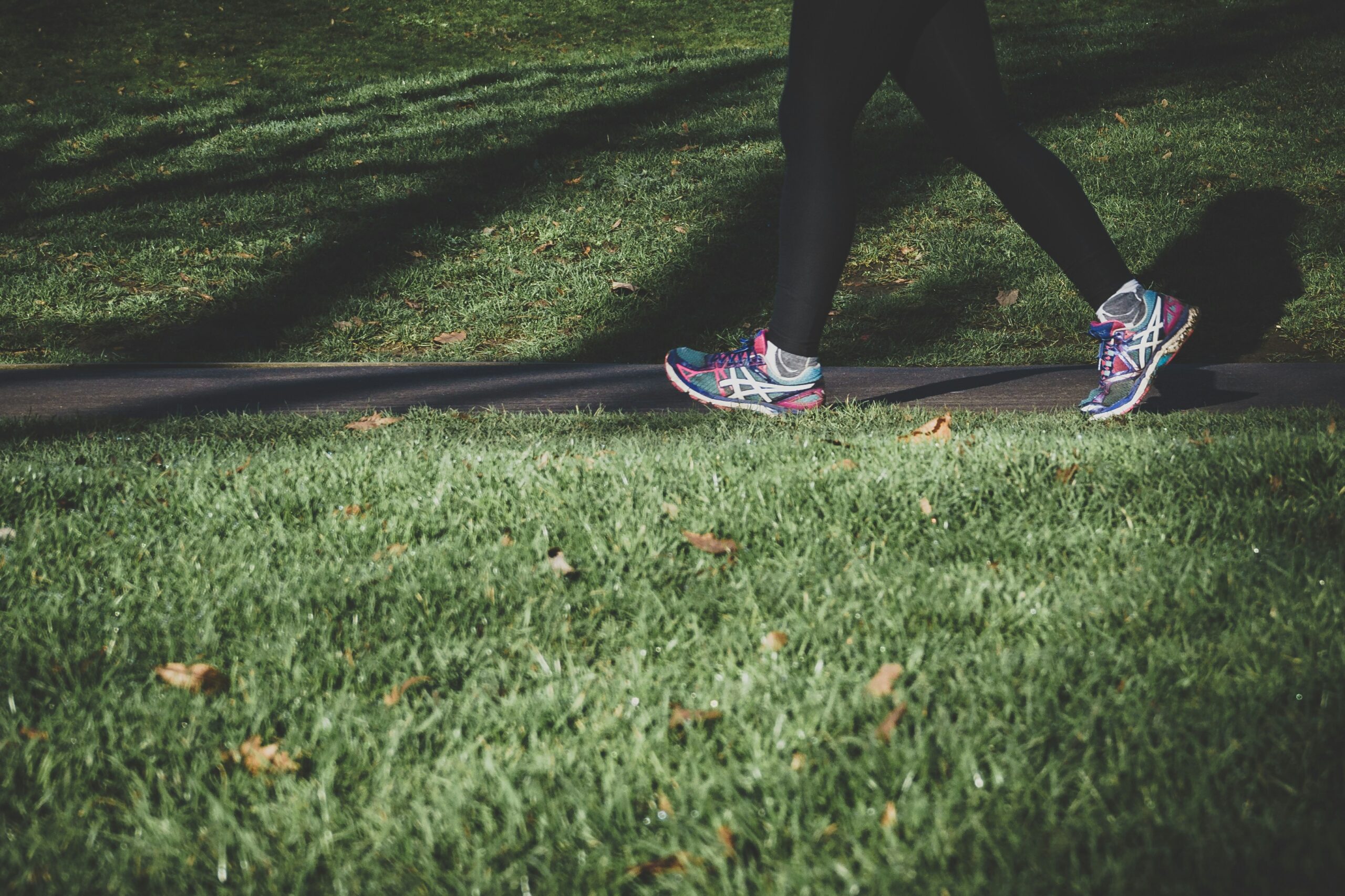
Photo from Arek Adeoye / Unsplash
Looking for a Leadership or Business Coaching in Berlin?
In my coaching studio in Berlin-Charlottenburg, as well as through online/remote coaching, I support my clients in exploring their unique leadership style. Leadership coaching and business coaching are effective, scientifically proven ways to improve performance as a leader. To ensure the quality of my coaching, I am a member of the DBVC, Germany’s largest professional coaching association.